

Your Safety - Your CCTV Team
Tenant Voice Panel Visits Dacorum CCTV Control Room
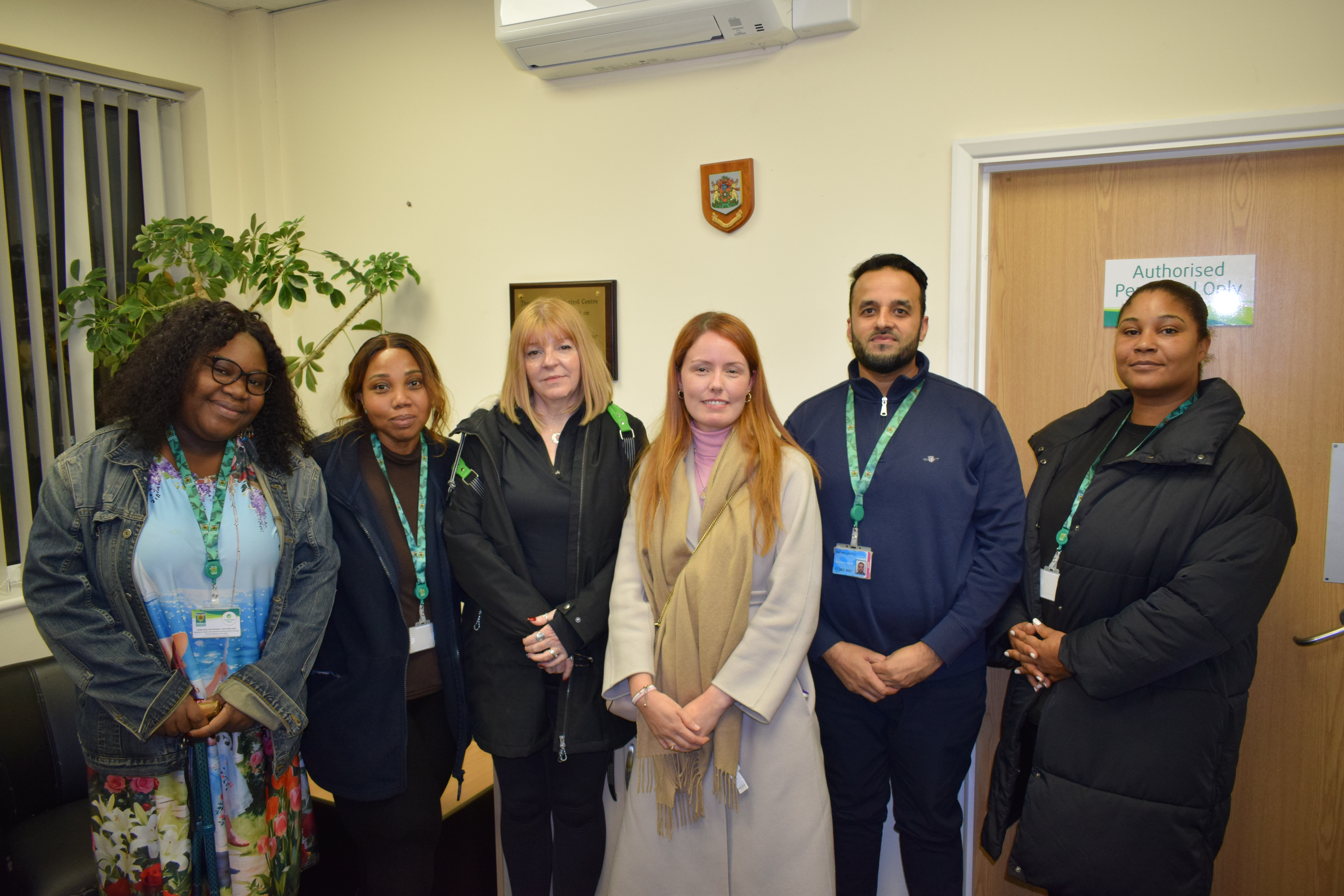
Members of the Tenant Voice Panel recently visited Dacorum Borough Council’s CCTV Control Room to learn more about how the service operates, supports investigations and works with partner agencies across the borough.
During the visit, panel members met the CCTV team, toured the control room and asked a range of questions about CCTV coverage, incident management, crime prevention and future developments. A summary of questions asked by the panel, and their responses, are listed below:
CCTV Monitoring
CCTV is monitored 24/7, year-round, by trained operators who identify incidents, respond to suspicious activity and escalate concerns to relevant services. Operators also review footage and provide evidence to support police investigations, insurance claims and authorised partner agencies.
When incidents are identified through CCTV, operators assess their severity and respond accordingly. Live footage and updates are shared with police for urgent incidents, while other cases are reviewed and evidence provided to relevant teams, such as Environmental Enforcement and Tenancy Management, to support investigations, enforcement and follow up action.
CCTV Coverage and Maintenance
Panel members asked how CCTV cameras are monitored and whether new cameras can be installed in areas with limited coverage.
CCTV cameras are checked daily, with faults reported for repair and an in house engineer available to resolve technical issues. Blind spots can be addressed by adjusting existing cameras or deploying temporary CCTV. Permanent cameras in residential areas may be considered where there is a clear operational need, subject to privacy, legal and cost considerations. Residents should report concerns to Tenancy Management for assessment and potential funding options.
Questions were also raised about CCTV coverage in car parks, rooftop gardens, bin areas and communal spaces.
CCTV coverage varies across developments, depending on site design, existing systems and funding, with most new builds covering entrances and communal areas. Additional CCTV must be balanced against costs to residents, privacy and legal requirements. Concerns about coverage gaps should be referred to Tenancy Management for assessment, with options including repositioning cameras, temporary deployments or permanent installations where justified and funding allows.
Anti Social Behaviour and Enforcement
Panel members asked whether individuals had been identified through CCTV in relation to dog fouling in the car park or rooftop gardens.
CCTV footage is reviewed to identify individuals responsible for dog fouling and other anti social behaviour where possible. Evidence is shared with relevant teams, including the police, Tenancy Management and Environmental Enforcement, to support investigations and appropriate action, which may include formal warnings, tenancy enforcement or criminal proceedings, depending on the findings.
Questions were also raised about fly tipping, furniture left in communal areas and rubbish being left outside the bins.
CCTV can help identify and deter fly tipping and improper rubbish disposal, supporting enforcement action. Residents should report incidents to Tenancy Management, which can review existing coverage, adjust cameras or consider temporary CCTV. Permanent cameras will be assessed case by case, considering effectiveness, privacy, costs and potential service charge implications, alongside alternative solutions and funding.
Vehicle Damage and Parcel Theft
Panel members asked about the process for reviewing CCTV following reports of vehicle damage.
When vehicle damage is reported, CCTV footage is reviewed and relevant evidence provided to the police, insurers and other parties upon request. The control room conducts over 200 footage requests monthly, supporting investigations and insurance claims. However, the effectiveness of CCTV depends on whether the incident was captured and whether the footage provides clear, conclusive evidence.
The visit also included questions about parcel thefts and whether CCTV could be installed in communal areas, foyers and mail rooms.
CCTV footage has been shared with the police and Tenancy Management to support parcel theft investigations. Additional cameras in communal areas will be considered where thefts persist, taking into account costs, resident service charges, operational need, funding and approvals. Residents should report incidents to the police and Tenancy Management so that CCTV and alternative security measures can be explored.
Assessing Effectiveness
Panel members asked how the council assesses the effectiveness of the CCTV system.
CCTV effectiveness is assessed through ongoing monitoring, incident reviews, footage requests and feedback from the police and partner agencies, with over 200 footage requests conducted monthly. CCTV supports investigations, enforcement and crime prevention, but confirming a reduction in crime or anti social behaviour at a specific block requires site specific incident data and comparisons over time. Where concerns persist, camera adjustments or additional coverage may be considered.
Questions were also raised about whether CCTV recordings are monitored proactively or only reviewed after an incident is reported.
CCTV is proactively monitored to identify suspicious activity, gather evidence and provide live footage to police for an immediate response where appropriate. This supports arrests, convictions and crime prevention. Investigation outcomes are shared with residents where appropriate, and action is taken against offenders in accordance with established procedures and legal requirements.
Working with Police
When asked about the CCTV team’s relationship with the local police, the team explained that they work closely with the local police to support crime prevention, investigations and community safety through CCTV footage sharing and direct communication channels, including encrypted radios and a dedicated phone line. This collaboration enables a swift response to incidents and supports the prevention and detection of crime.
CCTV Team and Resilience
Panel members also asked about staffing levels within the CCTV unit.
The CCTV unit consists of 6 operators, 2 leads, 3 stand by operators and a Team Manager.
In response to questions about power outages, the team confirmed that there is a UPS system for smaller power outages as well as a heavy-duty generator with the ability to power the entire site.
CCTV Across Dacorum
Questions were asked about CCTV coverage throughout Dacorum.
Dacorum has an extensive CCTV network covering key public spaces across Hemel Hempstead, Berkhamsted and Tring, supported by deployable cameras to target crime and anti social behaviour hotspots.
The team explained that CCTV coverage is guided by crime data, intelligence and emerging trends to prioritise areas where it can have the greatest impact. Additional coverage is assessed on a cost effective basis, using existing camera adjustments or temporary CCTV in hotspots where appropriate to address local concerns and maximise resources.
The current CCTV system includes 667 cameras in total. The Backhaul infrastructure was upgraded in 2024, providing the capacity to add three times as many cameras as are currently in operation.
Future Considerations
Panel members asked about the use of aerial drones.
The CCTV team stated that aerial drones could enhance CCTV operations, crime prevention and community safety. However, due to licensing requirements, costs and staffing needs, they are not currently financially viable but may be considered in the future as resources and priorities evolve.

Thank you for your contribution!
Help us reach out to more people in the community
Share this with family and friends